Are Mobile Field Hospitals the Future of Healthcare?
Across America’s rural communities, hospitals are closing, providers are retiring, and access to healthcare is becoming harder than ever. For millions of residents, a simple check-up can mean driving 60 miles or more. Emergencies can turn critical while patients are still literally en route. This widening gap isn’t just a matter of inconvenient distance, it’s a matter of survival. But what if there’s a better way. What if the future of healthcare isn’t built but instead, deployed.
Bringing Care to the Edge
Mobile field hospitals and mobile clinics have redefined access to healthcare in underserved and hard-to-reach communities within the last decade. These fully equipped, rapidly deployable units have brought essential care directly to the people, delivering primary care, diagnostics, specialty services, and emergency support without requiring a permanent brick-and-mortar facility. Rather than just simply filling gaps, they extend the reach of traditional hospitals. Equipped with integrated climate control, power, water, and telecommunications, each unit operates as a complete medical environment. They can also tie into existing utility infrastructure when available or just run entirely off-grid for true operational independence. These mobile healthcare solutions represent a the new generation of infrastructure that is built for adaptability, resilience, and a deep commitment to community accessibility.
5 Key Benefits to Mobile Medical Infrastructure
Access Without Barriers
In rural America, distance is one of the largest obstacles to timely care. Mobile clinics remove that barrier by bringing healthcare directly to patients’ doors. Whether stationed in a community hub, rotating between towns, or deployed after disasters, mobile units make healthcare accessible and sustainable.
Cost-Effective and Sustainable
Building permanent hospitals in low-density regions isn’t always practical or financially viable. A deployable model reduces construction costs, operational expenses, and downtime. It allows healthcare systems to allocate resources efficiently, deploying care where and when it’s needed most.
Rapid Deployment and Flexibility
Unlike traditional facilities that take years to plan and build, mobile hospitals can be operational within days. They can scale up during seasonal surges, natural disasters, or public health emergencies, and redeploy as needs change.
Bridging Workforce Gaps
Rural provider shortages leave entire communities underserved. Mobile units can bring rotating healthcare teams, telehealth connectivity, and even remote diagnostics to the field, offering consistent access to high-quality care.
Disaster Readiness and Community Resilience
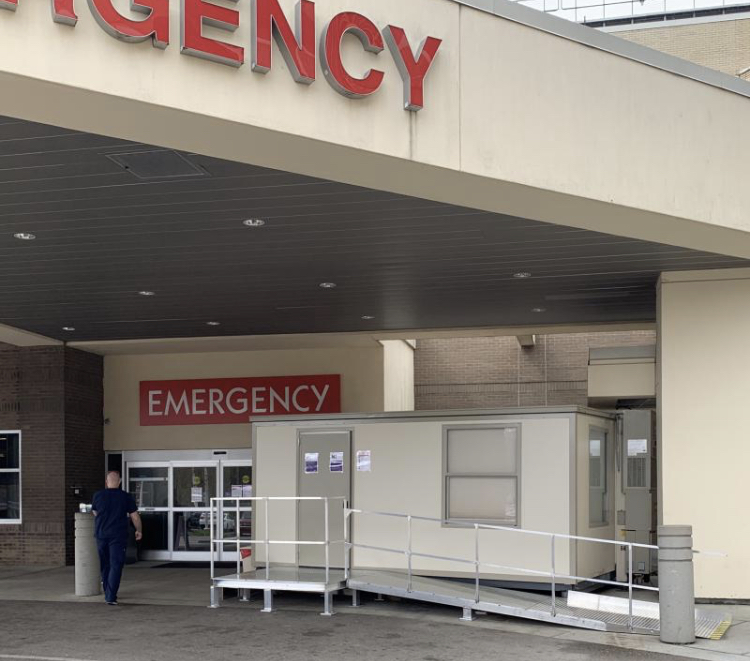
Mobile field hospitals often serve as everyday healthcare access and emergency response. So when disasters strike, whether wildfires, hurricanes, or hospital shutdowns, deployable infrastructure can restore operations within hours.
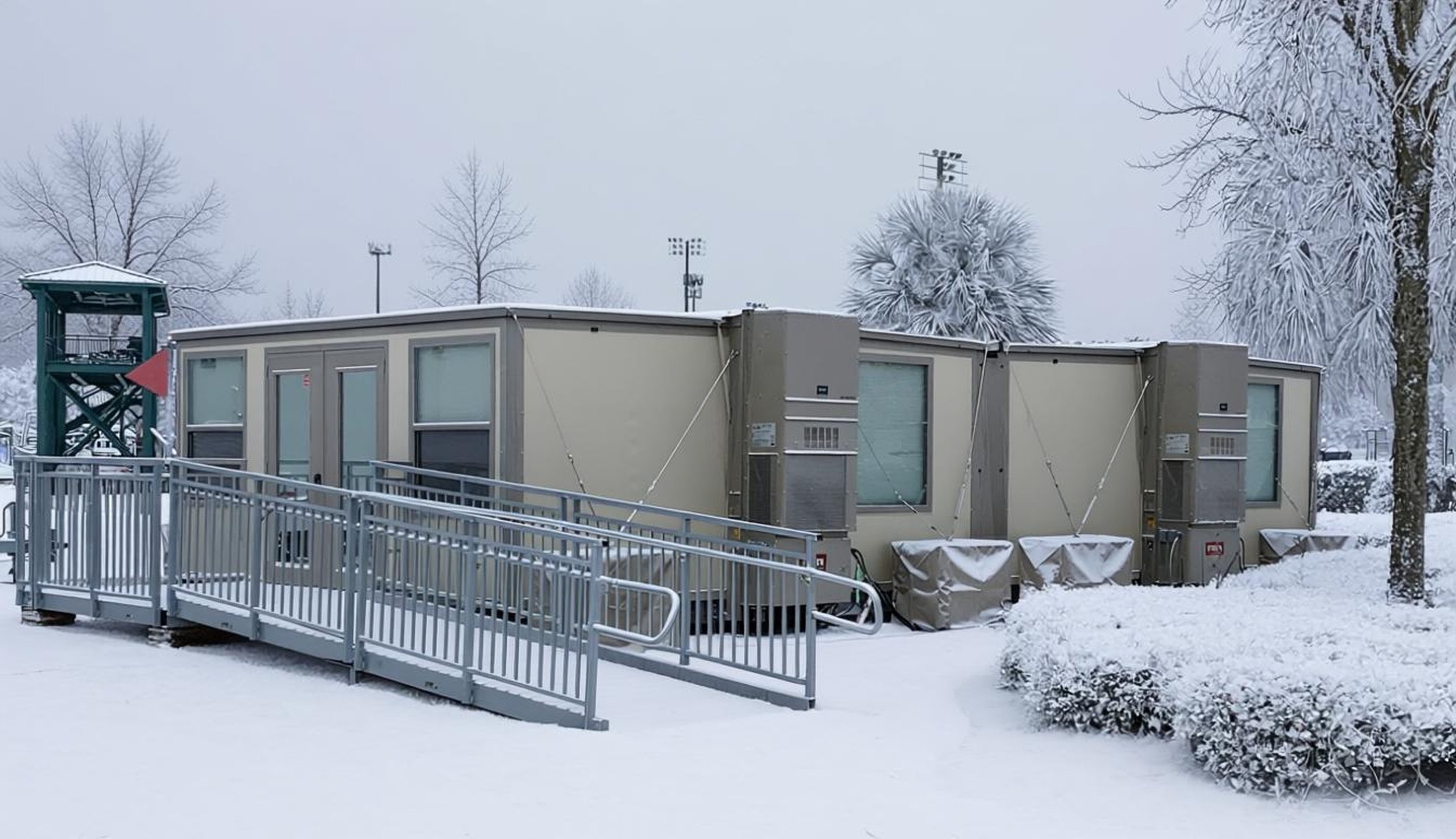
FORTS mobile hospital units in winter snow
Adaptable in Any Environment
Mobile medical units are designed to deploy fast and function reliably in any setting. Every FORTS® medical unit is purpose-built to perform under pressure. Their hard-walled, insulated construction protects structural integrity while maintaining consistent climate control through extreme heat, freezing temperatures, high winds, or heavy humidity.
Today’s modern mobile clinics come equipped with:
Satellite internet and 4G/5G communications
Renewable power generation and advanced HVAC
Integrated medical oxygen and compressed air life-support systems
Together, these capabilities bring hospital-grade care to communities facing the harshest environments, ensuring access, continuity, and stability where permanent facilities are inaccessible.

A Vision for the Future
Imagine a future where no patient has to travel hours for care. Where a mobile clinic parks in a town square every monthly, offering screenings, tele-consultations, and preventive care. Where temporary field hospitals support local providers during renovations or emergencies.
This is not a distant dream, it’s already happening across the country. The next step is expanding reach.
FORTS Is Helping Lead the Way
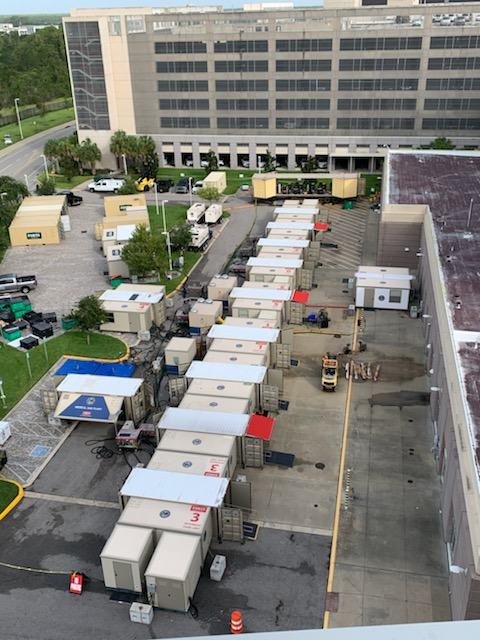
Over the past six months, FORTS Logistics has deployed mobile field hospitals, temporary fire-rescue stations, and fully equipped medical clinics across the country, each engineered for speed, reliability, and seamless integration with local systems.


Every installation was configured to match its environment and mission requirements, supporting patient care, operational continuity, and command functions without interruption.
Through programs like RapidReserve™, organizations now have guaranteed, first-in-line access to the mobile infrastructure they need to stay ready for both planned projects and unforeseen disruptions.
The future of rural healthcare isn’t about building more hospitals, it’s about bringing hospitals to the people.
Deployable medical infrastructure is more than a convenience, it’s a commitment to equity, innovation, and preparedness. As the nation rethinks how and where care is delivered, mobile field hospitals and clinics will become the backbone of a resilient healthcare system.
Be Ready Before You Need to Be.